
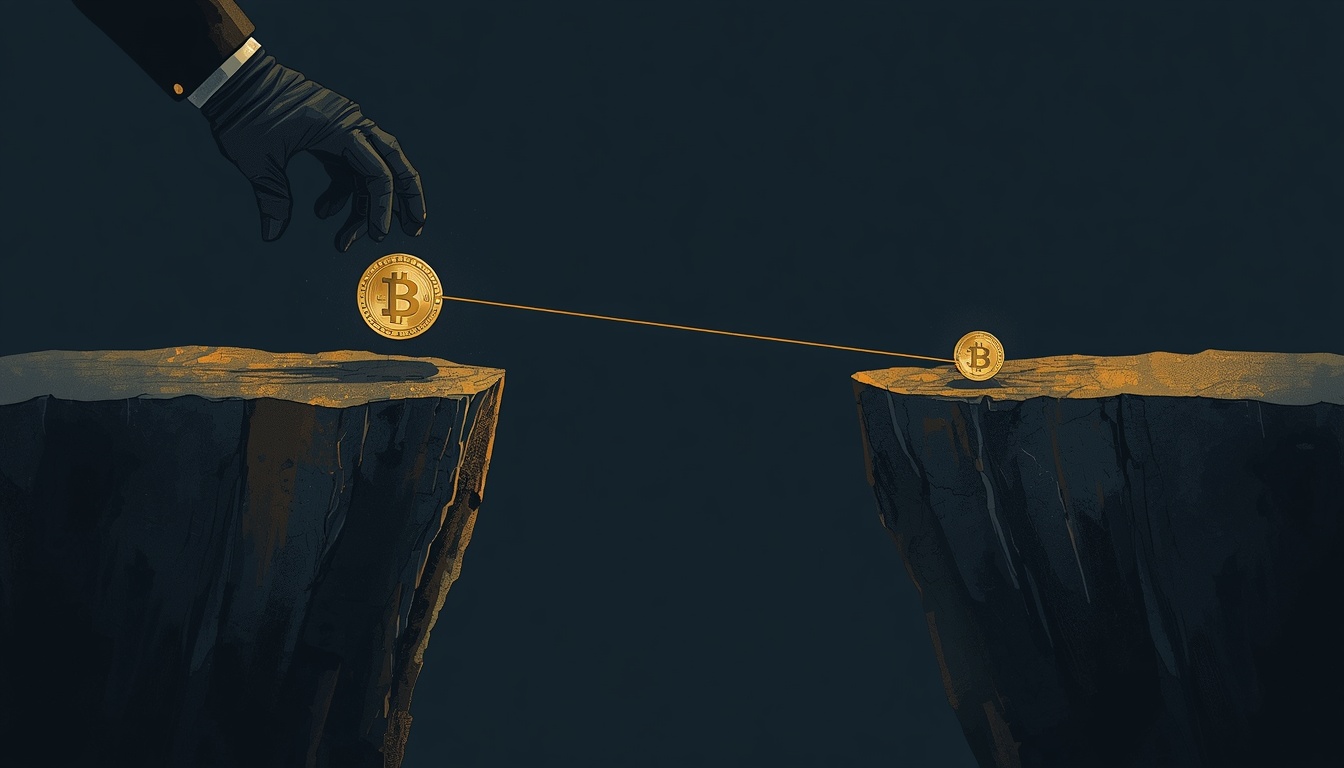
BIP-110 Splits, Then Stalls
Nodes enforcing BIP-110 split from Bitcoin's main chain at block 961,632 on Saturday, rejecting the first non-signalling block — a one-sided defection that immediately stalled, the minority chain producing two blocks while the main chain added dozens. Foundry's customer vote resolved No, with non-responses counted against and support never near its 51% bar. Ledger and developers warned the fork carries no replay protection: transactions can be copied across chains, so claiming fork coins risks moving mainnet BTC. Update, Aug 9: fork remains frozen at two blocks — ~0.15% of hashrate enforces it, meaning most signalers aren't mining it, and a first difficulty adjustment would take decades"
Replay Risk: the danger is in claiming the free coins
The BIP-110 fork failed. That was never in doubt at 2.5% miner support.
The remaining hazard is replay attacks. When a chain splits, everyone who held bitcoin before the split holds the same coins on both chains.
It may be tempting to grab the "free" coins on the dead branch and sell them. But this fork shipped with no replay protection, so a transaction broadcast on one chain can be copied onto the other. Try to spend the worthless fork coins and you can move your real bitcoin with them.
Don't lose real money because of greed for a few pennies. If your coins sit on an exchange or in an ETF, none of this touches you.
Multi-media snippets
BIP-110 mining block accumulates transaction fees as chain competition continues
BIP-110 mandatory signaling activation imminent at block 961,632
Speaker corrects prior claim that BIP-110 mining effort had ended
Speaker describes game-theoretic incentives for mining pool defection in BIP-110 competition
BIP-110 user-activated soft fork attempt fails as mining pools reject signaling
21 sources
- b10c is an undersung hero always keeping an eye on Bitcoin's blockchain and network. · x.com · T2
- Selling BIP-110 Fork Coins Could Trigger Replay Attacks on Bitcoin, Developer Warns · blockchainreporter.net · T2
- Unsurprisingly, it was much ado about nothing. · x.com · T2
- Economic nodes decide Bitcoin consensus. · x.com · T2
- It’s fork day. · x.com · T2
- BIP-110 mining block accumulates transaction fees as chain competition continues · youtube.com · T2
- TECHINASIA: Bitcoin enters BIP-110 mandatory signaling window · techinasia.com · T2
- Bitcoin has undergone another fork, and the fork chain supporting BIP-110 is currently 18 blocks behind the mainnet. · lookonchain.com · T2
- You can't bluff your way into a successful UASF. · x.com · T2
- Bitcoin’s BIP-110 supporters split onto minority chain as main network pulls ahead · theblock.co · T1
- BIP-110 now has its own chain fork! https://t.co/F7WQf1Yyki · x.com · T2
- COINDESK: Bitcoin hits block 961,632 as the controversial BIP-110 soft fork attempt begins · coindesk.com · T2
- The disappointing thing about BIP-110 failing is that we won't be able to economically… · x.com · T2
- Ledger Issues BIP-110 Fork Security Reminder: The Soft Fork Has No Built-in Replay Protection, Claiming Fork Coins May Endanger Mainnet BTC · panewslab.com · T2
- BIP-110 mandatory signaling activation imminent at block 961,632 · youtube.com · T2
- I recall the tension while working at @BitGo in 2017 when we had intra-company disputes… · x.com · T2
- Speaker corrects prior claim that BIP-110 mining effort had ended · youtube.com · T2
- BIP-110 nodes and non BIP-110 nodes have officially diverged chain tips. 110 nodes are… · x.com · T2
- Speaker describes game-theoretic incentives for mining pool defection in BIP-110 competition · youtube.com · T2
- BIP-110 user-activated soft fork attempt fails as mining pools reject signaling · youtube.com · T2
- BIP-110 nodes fork from main chain after rejecting non-signaling block · cryptobriefing.com · T2


